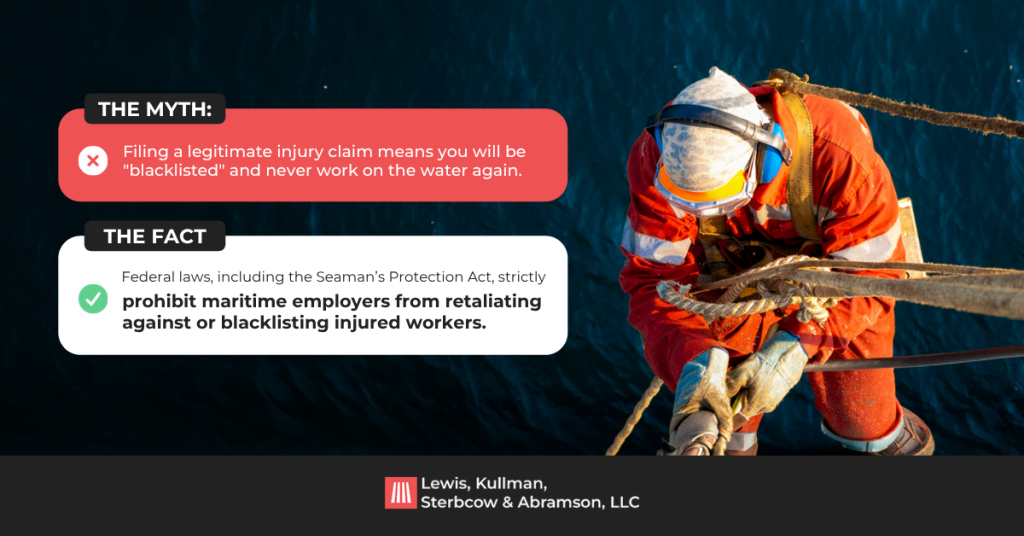
Filing a Jones Act claim does not end your maritime career. Federal law specifically prohibits employers from firing, demoting, or blacklisting workers who pursue legitimate injury claims, and violations carry serious legal consequences.
Fear of retaliation is one of the most common reasons injured offshore workers delay filing a claim, or never file at all. That fear is understandable. The offshore industry is relationship-driven, crews are small, and word travels fast. But the fear is based on a misunderstanding of what the law actually does and does not allow.
This post addresses the specific questions experienced maritime workers have about how filing a Jones Act, LHWCA, or general maritime law claim affects their employment.
What Maritime Claims Cover
Three types of claims protect injured maritime workers in offshore accidents:
- Jones Act Claims: If you qualify as a seaman, you can sue your employer directly for negligence and recover medical expenses, lost wages, lost earning capacity, and pain and suffering.
- Maintenance and Cure: Your employer owes you daily living expenses and the cost of all medical treatment from the date of injury, regardless of fault.
- Unseaworthiness Claims: If the vessel or its equipment was not reasonably fit for its purpose and that caused your injury, you have a claim against the vessel owner under general maritime law.
Most injured seamen pursue all three simultaneously. An LKSA attorney will identify which claims apply to your situation in a free consultation.
The Questions Experienced Maritime Workers Actually Ask
Can my employer fire me for filing a Jones Act claim?
No. Firing, demoting, or taking adverse employment action against a maritime worker for filing a Jones Act claim is prohibited under federal law. The Seaman’s Protection Act, codified at 46 U.S.C. § 2114, specifically prohibits employer retaliation against seamen who report injuries, refuse unsafe work, or pursue legal claims.
If your employer retaliates, you must act quickly. You have 180 days from the retaliatory action to file a complaint with OSHA’s Whistleblower Protection Program. Miss that deadline and you may lose the retaliation claim even if your underlying injury claim is still valid.
Can I be blacklisted from the industry?
Formal blacklisting, where an employer actively contacts other companies to prevent you from being hired, is illegal and creates additional legal liability for the employer. Proving informal blacklisting is harder, but it does happen in tight-knit offshore communities.
What you can do: document every job application, every response (or non-response), and every communication after you file your claim. If a pattern emerges where you cannot get hired in your field, that documentation becomes evidence of illegal conduct.
Will filing a claim affect my USCG Merchant Mariner credential?
No. Filing a civil injury claim under the Jones Act or general maritime law has no effect on your U.S. Coast Guard Merchant Mariner Credential (MMC). Your credential is tied to your training, certification, and physical fitness — not to whether you have pursued a legal claim against an employer.
Does my employer get notified when I file a claim?
Your employer becomes a party to a lawsuit when your attorney files and serves the complaint. Before that point, the claims process between you and your attorney is confidential. Your employer is not notified when you consult with an attorney or when you begin the process of building a claim.
Can I still work while my claim is pending?
Yes, in many cases. If your injuries permit you to return to light duty or modified work, you can continue working. Your maintenance and cure payments from your employer continue independently of whether you return to work. Your attorney can advise you on how working during the claims process affects your specific case.
What to Do If Your Employer Retaliates
If your employer fires, demotes, reassigns, or harasses you after you report an injury or file a claim, take these steps:
- Document everything immediately: save texts, emails, voicemails, and any written communications. Note dates, times, and witnesses to any adverse actions.
- File an OSHA complaint within 180 days of the retaliatory action. The complaint is filed under the Seaman’s Protection Act and initiates a federal investigation of the employer’s conduct.
- Contact your attorney: retaliation creates a separate legal claim on top of your original injury claim. Successful retaliation claims can result in reinstatement, back pay, and additional damages.
If you suspect informal blacklisting across employers in the industry, document job applications and responses and bring that documentation to your attorney. A pattern of rejections from companies with ties to your former employer is evidence that may support a blacklisting claim.
Talk to an LKSA Attorney — Confidential and Free
Fear of retaliation should not stop you from getting compensation for a serious injury. LKSA has represented offshore workers, deckhands, and maritime employees throughout the Gulf Coast for over 35 years. Our maritime attorneys have served as court-appointed counsel in the Deepwater Horizon and SEACOR Power litigations — and we know the offshore industry well enough to understand both the legal protections available and the practical realities workers face.
The consultation is free and confidential. Your employer is not notified when you call.