LEADERSHIP IN AMERICA’S MOST CONSEQUENTIAL MARITIME DISASTERS
New Orleans Maritime & Admiralty Lawyers
When the nation’s worst maritime disasters require legal leadership, federal courts appoint LKSA. Our attorneys have served in the most prominent roles in America’s largest maritime litigations, and we bring that same level of dedication to every client’s case.
Navigating the Unique World of Maritime & Admiralty Law
Maritime law, also known as admiralty law, is a body of federal law governing injuries, accidents, and commerce on navigable waters, including the Gulf of Mexico. Unlike land-based personal injury cases, maritime incidents are often governed by complex federal statutes like the Merchant Marine Act of 1920 (Jones Act), LHWCA, and others. For individuals working in and around the demanding environments of the Gulf Coast – from the bustling ports of New Orleans to the vast offshore oil fields of Louisiana – understanding these laws is crucial.
LKSA has represented maritime workers in federal courts from the Gulf Coast to the Eastern District of Louisiana for over 35 years. Our attorneys have shaped the law itself — authoring more than 100 published papers and arguing cases that defined Jones Act seaman status, damage recovery standards, and the availability of punitive damages for injured workers. When other attorneys face a maritime case beyond their reach, they refer it to us. When federal courts need leadership in a national disaster, they appoint us.
Leaders in America’s Most Consequential Maritime Disasters
A true measure of a firm’s capability is the trust placed in it by the judiciary to lead in times of crisis. Federal courts have repeatedly appointed our attorneys to leadership roles in the nation’s most significant maritime disasters.

Our reputation is further built on elite credentials and a commitment to academic excellence. Our attorneys have authored over 100 papers and are recognized by the most prestigious, invitation-only trial lawyer organizations in the world, including the American College of Trial Lawyers (ACTL) and the International Academy of Trial Lawyers (IATL). This is why judges and attorneys throughout the United States refer their most complex maritime cases to us, recognizing our firm as “Lawyers’ Lawyers.”
At a glance:
- Fellows, American College of Trial Lawyers — Paul Sterbcow, Harvey Lewis, Lawrence Kullman, David Abramson (fewer than 1% of U.S. attorneys qualify)
- Fellows, International Academy of Trial Lawyers — Paul Sterbcow, Harvey Lewis, Conrad Williams
- America’s Top 100 High Stakes Litigators — Paul Sterbcow
- In excess of $20,000,000 recovered — offshore helicopter crash, traumatic brain injury
- In excess of $14,421,477 recovered — Deepwater Horizon rig explosion, four injured workers
- Representing maritime workers and their families from New Orleans since 1987
Key Laws Protecting Maritime Workers
Our firm possesses in-depth knowledge of the specific statutes designed to protect maritime workers and those affected by incidents at sea. We are prepared to assist you with claims under:
Understanding the legal process after an incident is just as important as knowing the law itself. Read our guide on what happens in the first 48 hours after a major offshore accident and what you need to do to protect your rights.
Which Maritime Law Applies to My Injury?
The law that governs your claim determines who you can sue, what compensation you can recover, and what deadlines apply. The answer depends on three things: where you were working, what structure you were on, and your job classification. Use this framework as a starting point — a maritime attorney should always confirm which law applies to your specific situation.
You were working on a vessel in navigable waters → Jones Act — if you qualify as a seaman (spending at least 30% of your work time on a vessel contributing to its mission, you can sue your employer directly for negligence. The 30% threshold comes from the U.S. Supreme Court’s standard established in Chandris, Inc. v. Latsis, 515 U.S. 347 (1995).
You were working on a dock, pier, terminal, or shipyard → LHWCA — longshoremen, harbor workers, shipbuilders, and ship repairers injured on or adjacent to navigable waters are covered under this federal workers’ compensation system.
You were working on a fixed platform or structure on the Outer Continental Shelf → OCSLA — workers on fixed offshore platforms, drilling structures, and production facilities on the OCS who don’t qualify as Jones Act seamen are typically covered under OCSLA, which extends LHWCA benefits offshore.
A family member was killed in an accident more than three nautical miles from shore → DOHSA — the Death on the High Seas Act governs wrongful death claims for fatalities occurring beyond three nautical miles, with specific rules on what damages families can recover.
You were injured on a vessel or platform but don’t fit neatly into one category → General Maritime Law — even when a specific statute doesn’t apply, general maritime law may provide a claim for unseaworthiness, negligence, or maintenance and cure. Many offshore cases involve claims under multiple laws simultaneously.
Many offshore workers have rights under more than one of these laws at the same time. A Jones Act seaman injured on a vessel may also have an unseaworthiness claim under general maritime law. A platform worker covered by OCSLA may also have a third-party negligence claim against a contractor. Identifying every applicable claim — not just the most obvious one — is one of the most important things a maritime attorney does in the early stages of a case.
Not sure which law covers your situation? Talk to an LKSA attorney — free, confidential case review.
Types of Accidents & Workers We Represent
Our legal team has successfully navigated the complexities of a wide array of maritime and admiralty law cases, providing dedicated representation for victims of incidents across the industry. Our experience covers, but is not limited to:
We are proud to have represented a broad spectrum of maritime workers across all aspects of the marine industry, understanding the unique roles and risks involved. Our clients include individuals from:
In addition to Jones Act and maritime injury claims, our trial lawyers handle complex, high-stakes insurance disputes and bad faith litigation for commercial policyholders.
Securing Full & Fair Compensation for Your Maritime Injuries
If you have been injured in a maritime accident, you may be entitled to recover various types of damages. Our role is to thoroughly assess your case and pursue all available compensation from all liable parties under maritime law. Depending on the specific circumstances and applicable statutes (such as the Jones Act or LHWCA), this may include:
Our goal is to ensure you receive the maximum possible compensation to cover your losses and support your recovery, allowing you to focus on healing.
Calculating the full value of a maritime claim is a complex process. Watch our video to understand the different types of damages you may be entitled to after an offshore injury.
Your Maritime Law Questions Answered
Understanding your rights after a maritime injury can be confusing. Here are answers to some common questions our attorneys, with extensive experience in New Orleans maritime law, receive:
Maritime Justice Achieved: Stories of Our Impact
Our dedication to maritime clients has led to numerous successful outcomes. We are proud of the justice we’ve secured and the trust victims and their families place in our firm.
Offshore Oilfield Helicopter Crash
Offshore Oilfield Helicopter Crash – Resulting in a traumatic brain injury.
Result: In Excess of $20,000,000 (Settlement)
Deepwater Horizon Rig Explosion
Jones Act/General Maritime Law – Representing 4 rig workers injured in the Deepwater Horizon rig explosion.
Result: In Excess of $14,421,477 (Settlement)
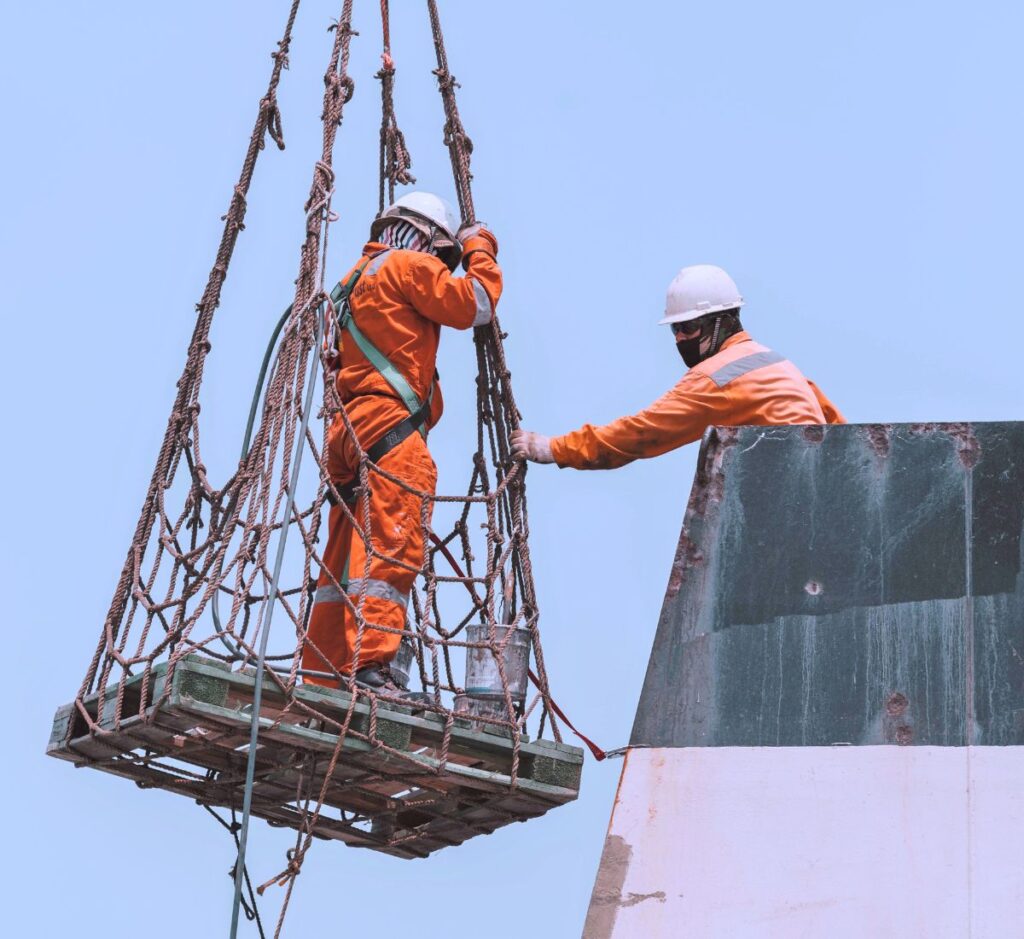
Injured on the Water? Take the First Step Towards Justice.
The path to justice after a maritime accident is complex, but you don’t have to navigate it alone. If you or a loved one was injured while working on or near navigable water, contact us for a free, confidential consultation.
Our experienced New Orleans maritime lawyers are ready to provide the advocacy you need.